A SPECIAL SNAIL .. HEMIPLECTA DISTINCTA 
I became interested in snail farming after reading an article in the papers about snails and the cosmetic industry in France in April 2016. At first, I wanted to raise Helix aspersa type snails - the variety they mainly eat in France. I had eaten them many times and loved it, but here in Thailand, they are very expensive. So after some research on the internet, I realized that they wouldn't survive the tropical heat and so became more and more interested in the local north-eastern Hemiplecta distincta variety.

The idea was to start my own small snail farm - breeding this type of snail in my orchard, as a future food source, and as a semi-retirement hobby - - at least I wouldn't have to run and chase after them if they escaped! (Ha ha). Getting these snails was a lot harder than expected, as they live in a "forest environment", and as you can imagine, much of it has gone. Eventually, a guy who lived in Srisaket province,  supplied me with my stock.

What interested me was that snails produced 2 types of mucus. The mucus produced when sliding over surfaces - also on people’s faces – as seen in so many adverts and internet sites; An oil as it were - is for ‘locomotion’. It is of no particular benefit to our skin.  But when it is under stress, the snail produces a foamy mucus - used as a defensive product against bacteria, to repair it's shell and to protect its skin. 

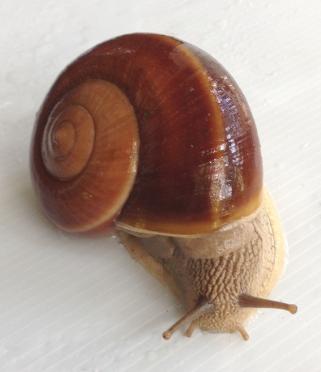
Furthermore, the mucus from the Hemiplecta distincta is, as has been found from Chulalongkorn University’s laboratory tests, is 30 times better in quality for cosmetic use, than that found in other types of snails ... as per one of my snails shown above. She's called "Money Penny"!

In France, they are going mad producing this 'stressed mucus' from the small Helix aspersa snails (what is also sold as escargots in the restaurants). Alas, this is an inferior product. The cosmetic industry in South Korea and Japan are very keen to have this mucus to add to their products and prices are very high! It also has healing and rejuvenating properties for skin burns, reducing stretch marks after pregnancies, as an anti aging and acne remover cream.  Stressed snail mucus is a very new product from natural sources - and very few people/ businesses know how to extract this product without harming the snails, not to mention, how to even look after them away from their natural environment. In Thailand, it's a totally new field!

Professor Somsak of Chulalongkorn University - with 20 years experience, pioneered the research into this snail type and of its mucus.

At first, I thought this snail business was going to be easy - with most of the food coming from the orchard - and in due course, when I had enough snails - in their thousands - I would "stress" them to produce this "special" mucus - which I would sell to the local cosmetic industry, and also eat them - cooked in parsley and butter - "grand escargots"! 

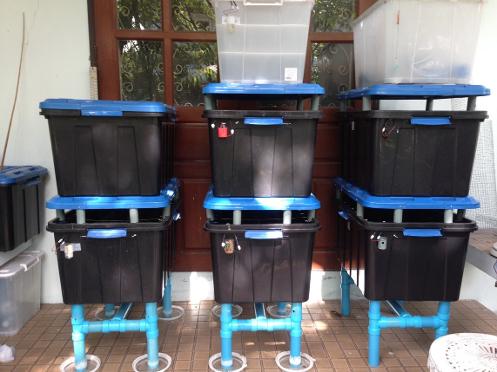
Although I have the space to set up a farm - a snailery, the area between the tamarind trees in the south-western corner of the orchard, it would also provide perfect shade and cover from the road and neighbour's house. But instead, I decided to use large inexpensive storage bins to start with, in order to study, feed and breed these snails. I modified these bins and their covers, the pipes used to make the props are old pieces from previous abandoned projects - recycled! The original land  may still be used as a snailery at a later date - or when the snail 
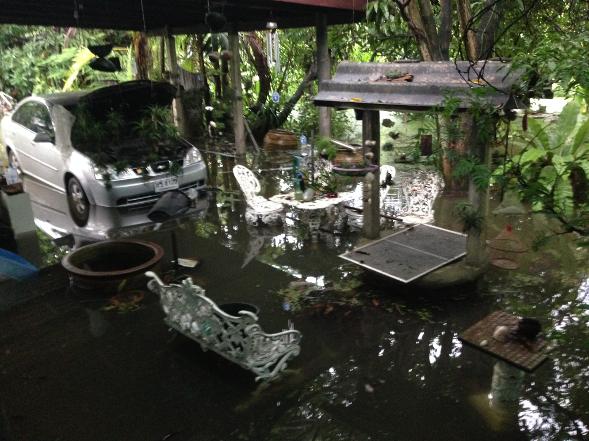
population has out grown the convenience of these bins,   but on 13th October 2017, we had the worst monsoon storm in over 30 years starting at around 1 am. Water totally flooded the orchard and came half way up to the car’s front wheels parked in the car port. If I had set up the snailery by the tamarind trees – the snails would have either drowned or floated away – certainly impossible to visit the following morning. It was flooded for 2 days. With climate change and land subsidence, maybe I should be planning a new design for a future larger snailery.
Anyway, what's largely available from the internet are details on farming the "French" snails - helix aspersa, and the giant african snails - achatina felicia - from which you can say, every Nigerian seems to know about, and are 'very easy' to raise, breed, and is a very profitable business to get into. Unfortunately, there is very little research or internet information on raising these hemiplecta d. snails - except from this Prof. Somsak ... and he doesn't give much away. There's information on parasitic infection from rats and varieties of snail types in the north-east but information regarding how they lay eggs, quantity, mating season, etc is very limited and vague, so I have to use quite a bit of educated guessing as the project progressed. For example, there is no information on what they eat, how to stress them ... to get this "expensive" mucus. 

In addition, there's virtually no references to using plastic storage bins in setting up a snailery - they all churp about 'wooden hutch boxes, old car tyres, galvanized roofing sheets, brick walls with copper strips ..' so I hope you find my ideas worthy of consideration. At least they can be easily cleaned, moved - they're light (they also have wheels), can be stacked to keep more snails or when awaiting use. Most important, especially if you are a beginner - they are cheap, so help you reduce your initial investment.

Anyway, what I have learnt is that in addition to food from the orchard, and duckweed from the pond, at times I also give them carrots, cucumbers and pumpkin ... which they really love. I get them at the local fresh market - a minute's walk away.  Furthermore, after much searching on the internet and some experimentation, I have built my own mucus extraction contraption which works pretty well, but it hasn't been put into full use as I don't have sufficient stocks yet.
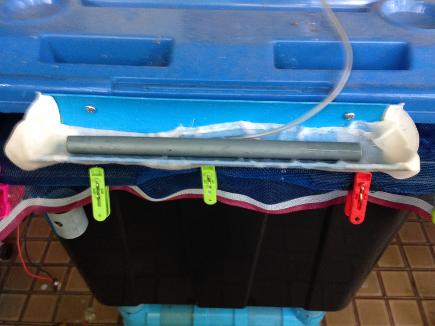
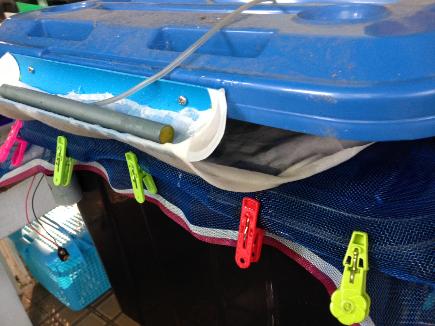
These bins have been placed in vacant areas around the house - making it easier to keep an eye on them - especially in the beginning, so helping me to quickly learn about their eating, breeding and other habits. With the monsoon weather, (rains start late afternoons) - evenings - time when the snails start feeding, so getting food to them is easy.  Spraying water on their habitat is also convenient - especially during the hot season, when they require frequent watering/misting. Recently, I developed a "saline drip" system ... using discarded bottles from my local clinic to keep the area moist and humid 24 hours (see pixs below) ...  also a cool "hide-away" corner using wet raised ceramic tiles (evaporation keeps the area underneath cool).

But there is still much to learn, this type of snail seems to be very difficult to keep and breed. If you intend to also raise this type of snail - I warn you, expect an initial high mortality rate.
The small grey pipe is sand filled to add weight and keep the wet cloth and drip tube in place. The cloth folds under the lid but on top of the netting - and with capillary action, the whole sheet is kept damp - and the area beneath it - very humid. All you then have to do, is to ensure the saline bottle is filled with clean water - which during the hot season, you will need to refill once a day.
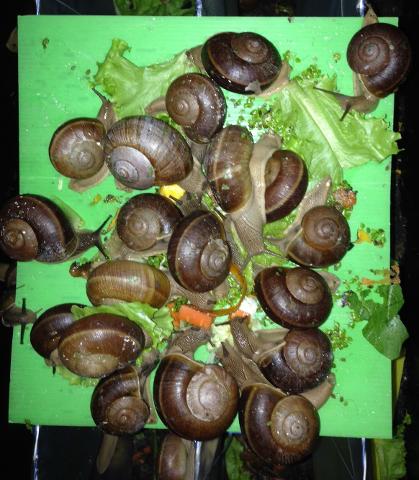
On the left: Snails clamoring to get at the tasty morcels - carrots, lettuce and pumpkin slices. 

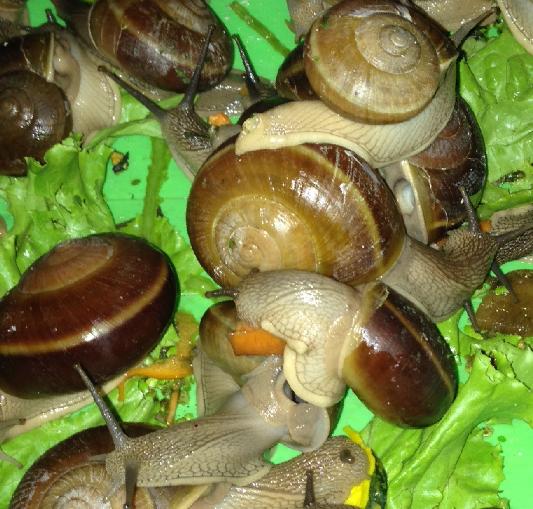
Above
: They'll crawl on top of one another to get to the food. The lower tentacles are for smelling. 

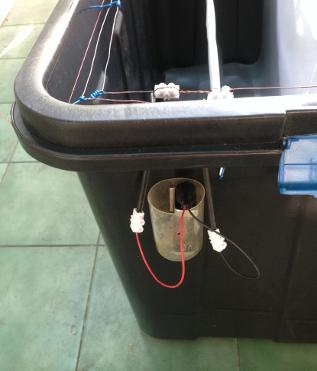
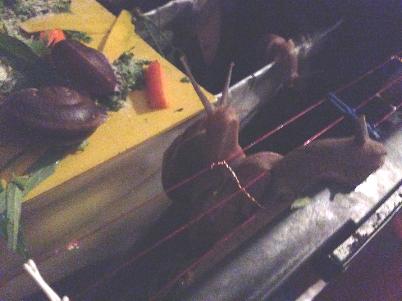
Lower left: They're very smart - on the right - a snail is stuck between 2 fishing lines - another crawls on top of its shell - thus gaining height to get over the top line - and this with very poor eyesight! The bins are electrified - using 9 volt batteries. The bins are now labelled - Alcatraz 1, 2, 3 etc. With small snails, the bins are covered in netting, as they can squeeze between the fishing/copper wires. A saucer of brine is placed at the base of the stands (as can be seen in the above 'stacked bins' pix), as a final deterrent!
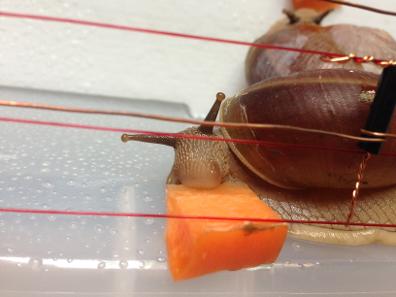
Munching on a chunk of carrot - so juicy! The copper wires are electrified.
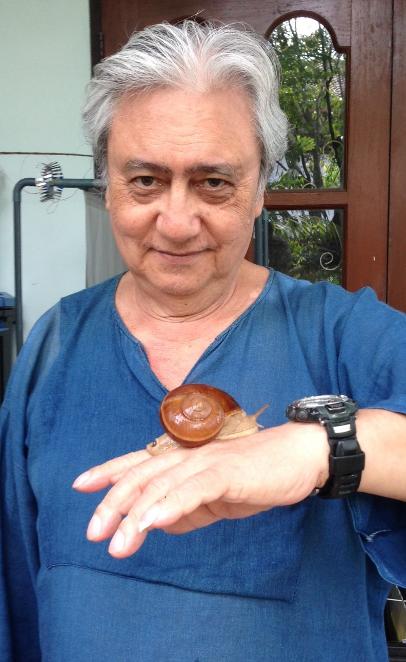
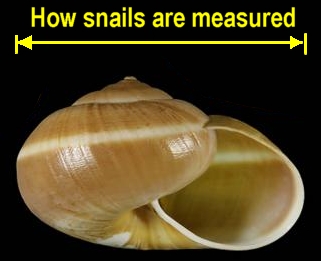
Well, if the professor can pose with his snail - so can I! This one's called Lady Eric (they're hermaphrodites*!), and her shell is 6.5 cms. long.

More pictures to come .... 

Interesting links: http://en.biomanantial.com/snail-give-yourself-new-skin-and-say-goodbye-stretch-marks-and-more-a-2546-en.html               -            https://www.thebeautyinsiders.com/snail-gel.html

  My phone: 086-557-5447                                Email: ellis1618@gmail.com        

 .... if you want to know more and are using an i-phone, click on the three horizontal lines at the top of this page for links ... to INFO Hemiplecta Distincta     

Did you know that snails were the pioneers in the transgender movement ??? Uh Uh  Tens of thousands of years ago - go and suck that one!
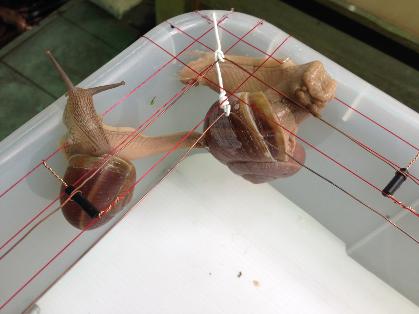
The new electric fenced Alcatraz Snail Prison - 2 convicts trying to escape! (But will fail).
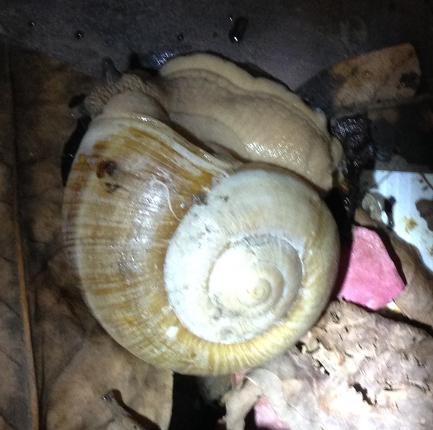
One of the snails - has a rather discoloured - worn look - especially the central ring of whorls that is colourless - bleached like ... the lip at the opening is also thick, so I guess it's a way to tell - it's old!

By-the-way, calcium powder is obtained from boiling, drying in the sun/oven, and finely blending chicken egg shells ...  Tried cuttlefish, but they stayed well away from it - maybe still too salty for their liking.
And no funny wise-cracks about 'bleaching' on top from you either!!!