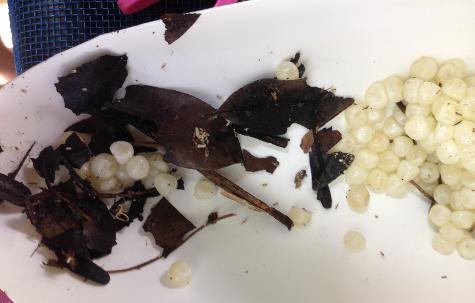
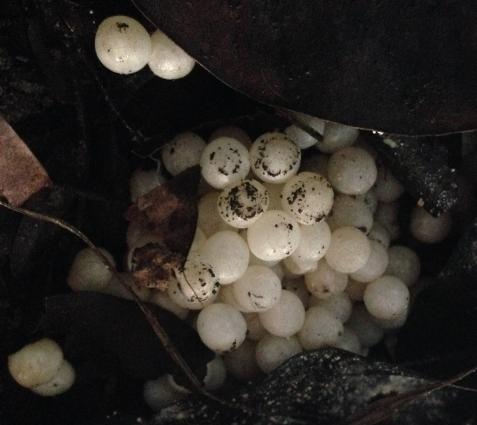
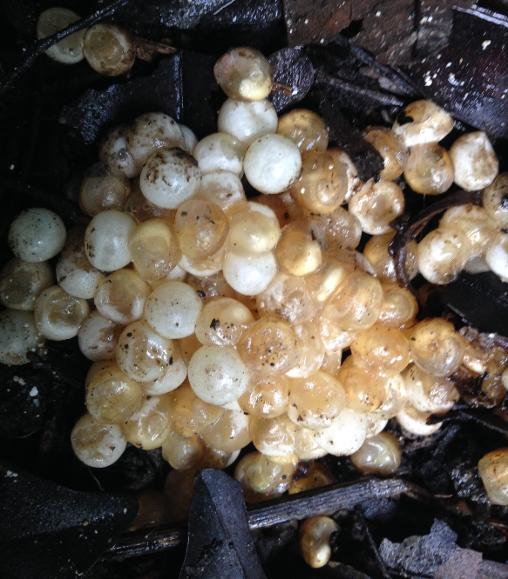
From my own experience, Hemiplecta distincta snails mate in April and May - the hot, dry season here in Thailand, and lay their eggs at the start of the rainy season - June, July ... perfect timing, as the "babies" hatch in damp soil making it easy to move around. Once you have found a snail has laid her eggs, after 3 days, scoop them out and place them in a separate 'nursery' tray. In my case, I was lucky, as just beneath this clutch of eggs - a huge number of tiny ants had decided to make a nest there and had also laid their heap of eggs (as you can see a number of them in the pix below left). I guess an ideal food source right above them. I then covered the eggs with the leaves they were originally buried in and gave it a good spray of rain water. The eggs are soft shelled and remain so throughout their embryonic development. Size - 0.56 cms. diameter.
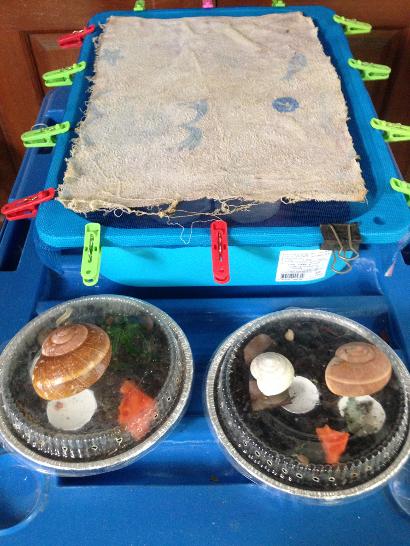
I put an old damp rag on top of the netting to keep the space beneath humid and which I sprayed on daily. You can also see 2 small trays to one side of the nursery tray - the left one contained 3 baby hemiplecta siamesis - abundant in our orchard, and 2 baby H. distinctas ... to test for what type of food they consume).
The closer to hatching - which is around 15 to 18 days, the more the eggs will change colour - from pearly white to a light brown opaque ball. Sprinkle hen's egg shell powder around the clutch to help the new hatchlings find calcium. They love cucumber.
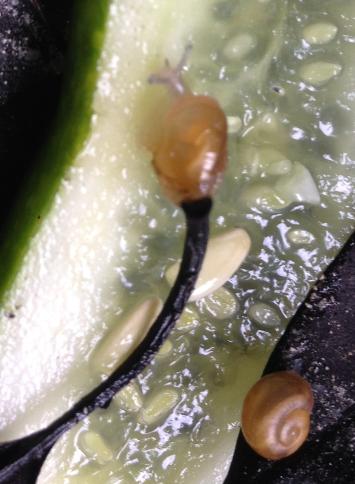
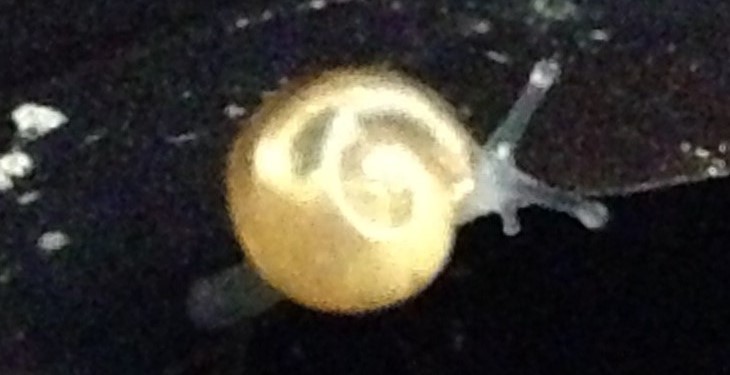
The baby snail on the right is only a few hours old - still transparent. So delicate. I guess in nature, survival rate must be fairly low - as they are food to ants, rats, snakes and other insects. Anyway, I wonder how long it'll be before my lot start asking for their own i-phones!
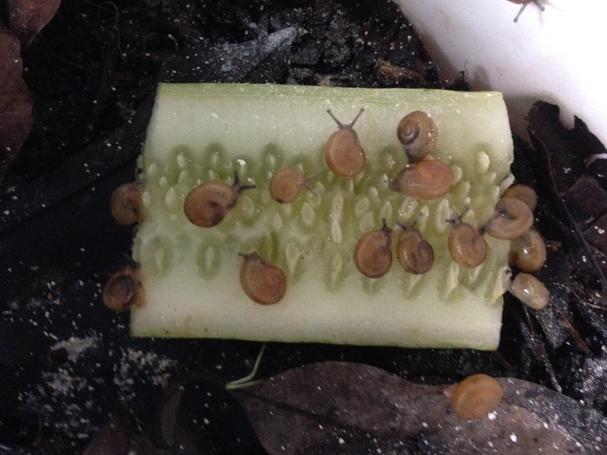
But in the meantime, they're happy to be feasting on some juicy chunk of cucumber! (White spots is the calcium powder). Tried papaya - not yet interested.
Over 100 and counting have hatched so far.
Below, comparison at left of 19 days at 1.5 cms, and right - 30 days at 2.1 cms. Feeding on my special formula ... growing so fast.
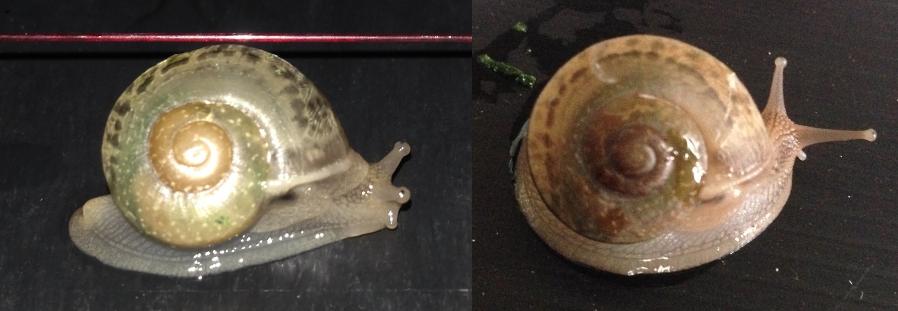
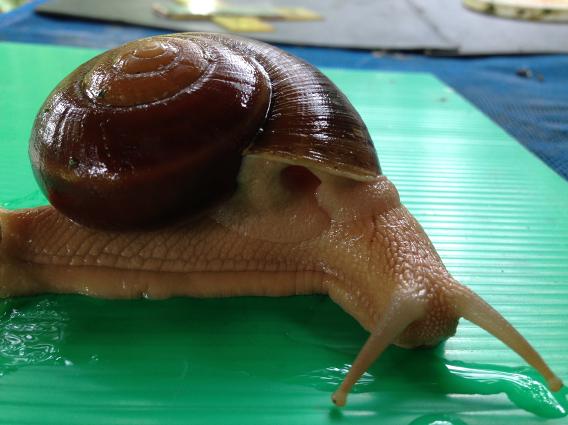
As an update on the eggs' progress, pics on the left is "Sir Brian" measuring 6.1 cms at 5.5 months old - lovely shell colour, and in good health. Air hole wide open. Wonder how much bigger he will get?